
Have you ever reflected on the importance of self-knowledge? Over the years, I have come to realize that understanding oneself, on a deeper level, is a very good investment. Self-knowledge improves our chances for a harmonious life, as it facilitates greater self-acceptance, self-compassion and self-love. Understanding oneself is also a prerequisite for being able to understand others. It may not seem obvious, but when we understand others better, we can also more easily accept, forgive and interact with people around us. (To understand ourselves and others, I find the Enneagram personality framework to be an excellent tool, by helping us to recognize inherent patterns in one’s personality. Read more here.)
Knowing oneself does not only mean that we have come to understand, for example, how we want to live, what values we hold, and what preferences we have developed on different levels. Self-knowledge is more profound and subtle than that. Knowing oneself deeply includes an insight into previously unconscious thought patterns, beliefs and recurring feelings, as well as automatic behaviours and other tendencies. When we become aware of these patterns, we can more easily discern and observe our thoughts, feelings and behaviours in the moment, and become aware of how these affect both our own life experience and other people around us.
Deep self-awareness also means that we can more easily recognize our choices in every moment. When we learn to observe ourselves (our thoughts, feelings and behaviors), we do not have to fall back on habitual patterns time and time again, but we suddenly have the opportunity to choose something new – a new thought, a new attitude or a new behavior. The result is that we can live from more constructive patterns. Our spontaneous, habitual patterns are often “reactive” and not seldom negative in some form. For example, we can easily become critical and judgmental of others, or of ourselves, without thinking. This happens when our personality – or our “ego” – is allowed to interpret our situation and steer us – in contrast to our “higher self” or Soul, which is anchored in wisdom, truth, compassion and unconditional love.
If you’ve had a deeper conversation or session with me, you will recognize my reasoning that our personality affects us in many ways. Our personality not only impacts our everyday behaviors but also our thought patterns and subconscious beliefs. Yet, our beliefs are not only influenced by our personality, but many of them are inherited from our parents, our upbringing, or our social culture. Furthermore, some central beliefs have in fact been created by our own subconscious mind when we experienced something very challenging, painful or shocking, so as to protect us from not experiencing the same hurtful feelings again. (To make it even more complex, all of these factors tend to interact and reinforce one another.)
Another topic that I often bring up in sessions is our “life themes” and how they have developed and affect us in everyday life. You can hear me explain more about this topic in a Swedish video here. By gaining insights into our life themes, we will understand our lives even further, including why certain events keep recurring.
We have been encouraged for 2,500 years
The words “Know thyself” are engraved on the Temple of Apollo in Delphi in Greece (probably based on the wisdom of several people of that time). The words were engraved during the 7th or 6th century BC and encouraged people to develop greater self-knowledge even then. The expression is also usually associated with Socrates, a philosopher who lived and worked in Athens during Greek antiquity (c. 470 BC to 399 BC). According to Socrates, self-knowledge is the key to wisdom and a righteous and meaningful life. Socrates himself did not write any books, but his student Plato wrote several books in which Socrates’ messages have been preserved. Plato’s book “The First Alcibiades” (from the 390s BC) is a fictional dialogue between Socrates and his student Alcibiades in which the meaning of “Know thyself” is clearly evident. According to Socrates, a lack of self-awareness leads not only to an unhappy life but also to a risk of engaging in bad behavior towards others. The passage below is an excerpt from the book. (I have only included Socrates’ words, formulated as questions to Alcibiades, and excluded the latter’s answers.)
Socrates: “But if we have no self-knowledge and no wisdom, can we ever know our own good and evil?” – “And he who knows not the things which belong to himself, will in like manner be ignorant of the things which belong to others?” – “Then he who is not wise and good cannot be happy?” – “And if so, not he who has riches, but he who has wisdom, is delivered from his misery?” – “In that mirror you will see and know yourselves and your own good?” – “And so you will act rightly and well?” – “In which case, I will be security for your happiness.” – “But if you act unrighteously, your eye will turn to the dark and godless, and being in darkness and ignorance of yourselves, you will probably do deeds of darkness.” (Källa)
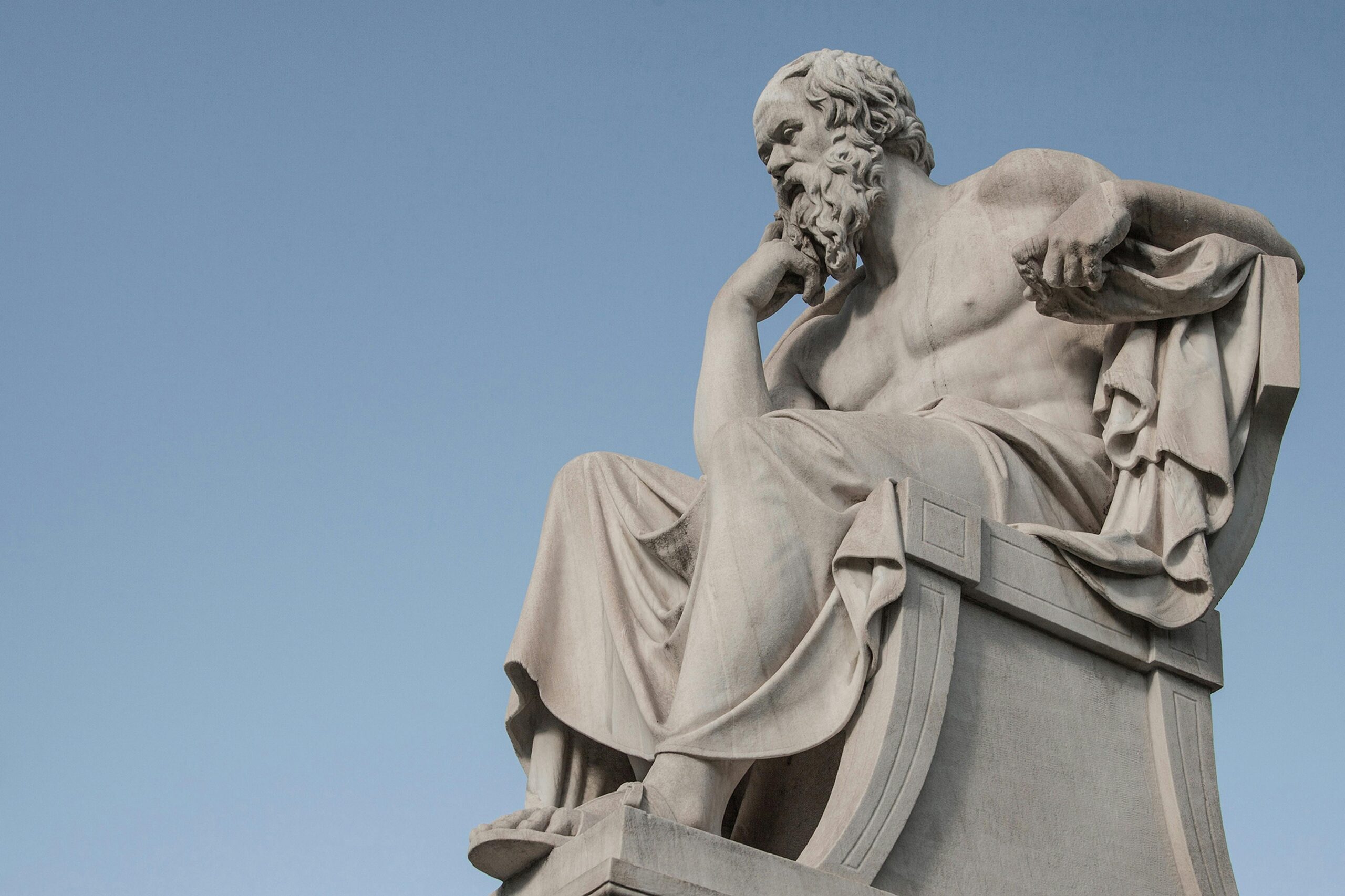
Statue of Sokrates. (Photo: Anne O Sullivan, Pexels.com)
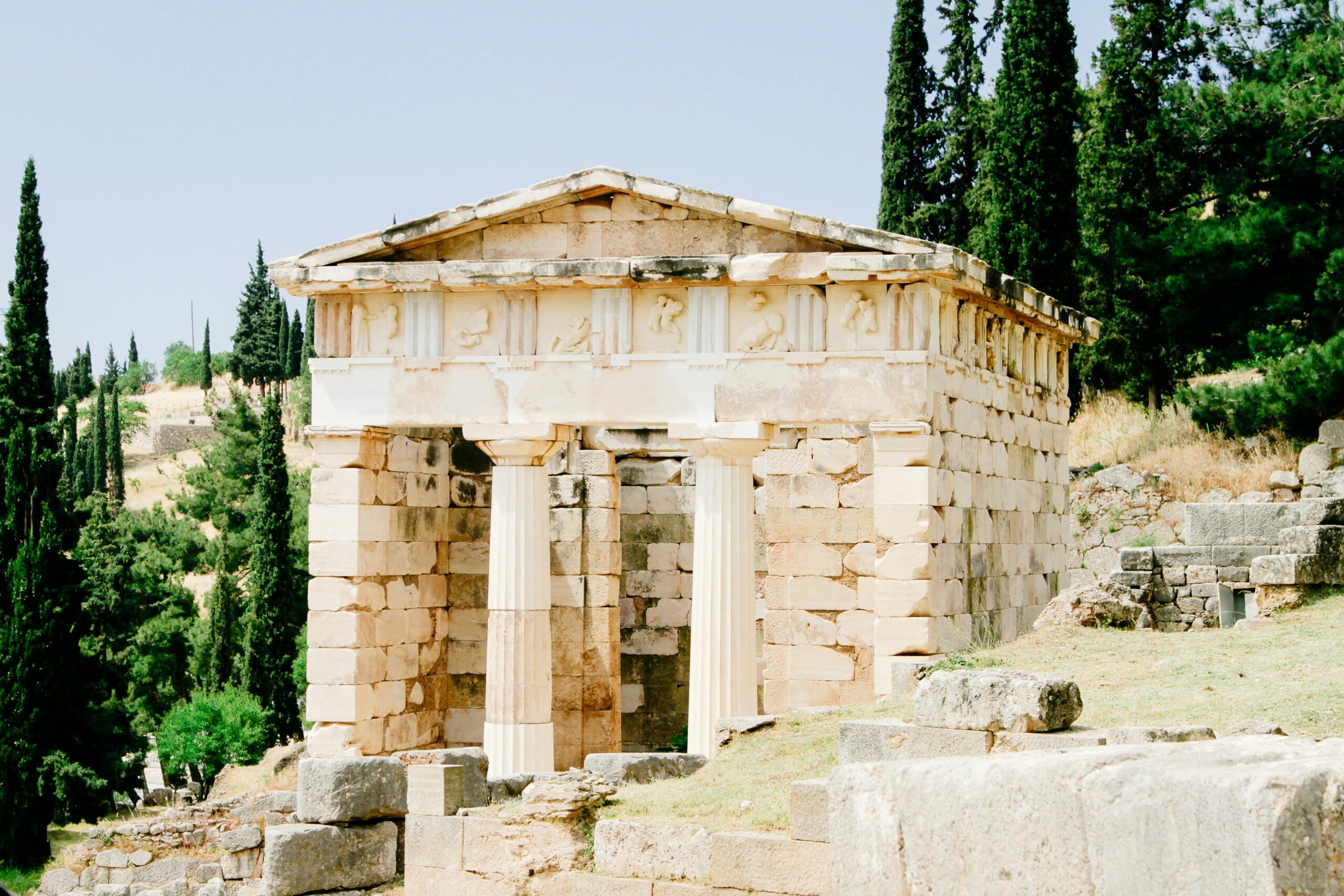
Temple of Apollo, Delphi. (Photo: Jeff Stapleton, Pexels.com)
A first conversation
If you would like to freely explore my coaching practice (as indepth conversations and profound healing processes*) without formally committing to anything, you are warmly welcome to book a free call of about 30 minutes over Zoom or phone. Here you will have the opportunity to ask questions and share your situation and needs. Also, welcome to contact me for any reason via email (see the Contact page). Hoping to hear from you and meeting you in person. // Anna
*which in part have been learned through an excellent online program by Lion Goodman). And, for more spiritual insights and wisdom teachings, I can warmly recommend Ted Nottingham, a dear mentor and friend of mine.
Note: This article was first written and sent out as a Newsletter for MindShift Coaching (in March 2026). To subscribe, please visit this link to sign up.